cropper
update
DigitalMarketingFootprint |a CapidHouser.com Media Site
update
  • Home
  • Categories
    • social media
    • virtual ai receptionist
    • chatbot marketing
    • reputation management & business reviews
    • social media header Image & graphics design
    • business review grams
    • video marketing
    • content marketing
    • Software Applications & Solutions
  • Digital Marketing Strategy Development
  • Search Engine Marketing
  • London Business & Marketing
  • Affiliate Marketing
  • ai in marketing
  • Paid Website Traffic
  • Programmatic Marketing Display Ads
  • Business Directories
October 10.2025
2 Minutes Read

Explore AI Marketing Strategies for Business Growth in the ChatGPT Era

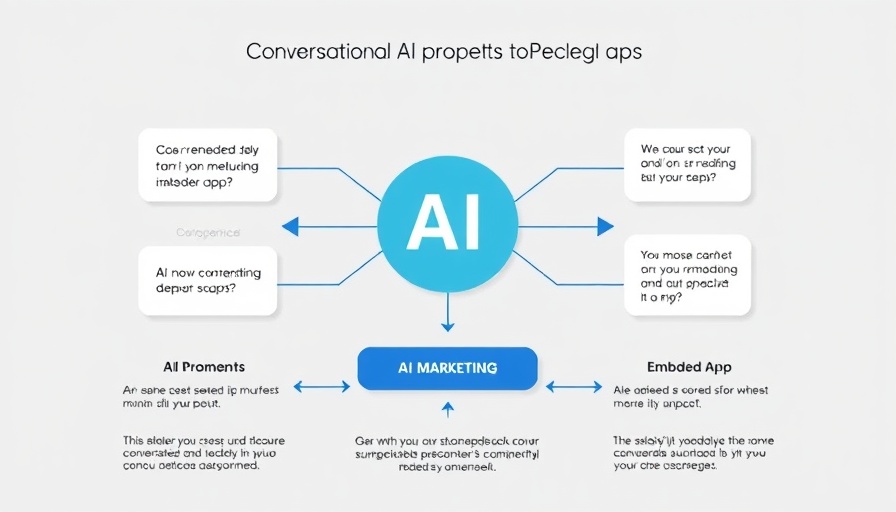
Diagram of AI marketing strategies for business growth integration.

Understanding the Emergence of AI in E-Commerce

The rise of artificial intelligence (AI) has transformed many sectors, and e-commerce is no exception. OpenAI’s recent advancements are changing the landscape of AI marketing strategies for business growth. With the new ChatGPT features, brands can now engage customers in a more interactive way than ever before.

What is the ChatGPT Ecosystem?

The ChatGPT ecosystem allows businesses to use conversational AI to connect with potential customers directly. Instead of just finding products through traditional search, users can discuss their needs and get tailored recommendations through AI conversation. This paradigm shift is key: chat becomes an integral part of the shopping experience, effectively collapsing the sales funnel.

A New Way to Sell: Instant Checkout

Instant Checkout, powered by the Agentic Commerce Protocol, enables users to make purchases directly in the ChatGPT interface. With this innovative feature, buyers can complete transactions without redirecting to external sites, simplifying the purchasing process. This system enhances user experience by reducing friction and making it easier than ever to shop online.

Benefits of Integrating AI in Your Marketing

  • Enhanced Customer Engagement: Chatbots improve lead generation while providing personalized interactions, driving customer satisfaction.
  • Data-Driven Insights: Using machine learning for branding helps businesses understand market trends and consumer behavior, leading to improved strategies.
  • Competitive Advantage: Brands leveraging AI-driven customer segmentation can target specific demographics effectively, enhancing overall marketing ROI.

Getting Prepared for the Future of E-Commerce

As AI continues to evolve, businesses must adapt to maintain relevance. Here are actionable insights for small business owners:

  • Integrate your systems with AI tools to ensure compatibility with platforms like ChatGPT.
  • Focus on optimizing data quality for better discoverability.
  • Explore AI-powered social media campaigns to enhance engagement.

Final Thoughts

The integration of AI into e-commerce is not a fleeting trend but a significant shift in how businesses will operate moving forward. Early adopters will find themselves at a crucial advantage in the emerging landscape defined by intelligent commerce. By embracing these changes, businesses can ensure they thrive in a dynamic digital environment.

ai in marketing

10 Views

0 Comments

Write A Comment

*
*
Please complete the captcha to submit your comment.
Related Posts All Posts
05.14.2026

Why FAQPage Markup Is Still Vital for AI-Powered Marketing Strategies

Update Understanding the Value of FAQPage Markup in the Age of AI Many small business owners may believe that the removal of FAQ rich snippets by Google in May 2026 signifies the end of FAQPage markup's usefulness in SEO. This assumption, however, overlooks the underlying value of structured data. While the visual feature designed to boost click-through rates (CTR) has disappeared, the semantic structure remains crucial for ensuring content is agent-consumable by AI systems. The broad shift towards AI-driven search makes adopting this structural data more important than ever. An Evolution of SEO and User Intent When Google introduced FAQ rich results, it aimed to enhance user experiences by structuring common questions and answers, allowing search engines to better understand content. The URL was packed with rich snippets to offer quick answers, leading to an uptick in engagement. However, over time, many users began exploiting this feature, resulting in a decline in quality, compelling Google to tighten eligibility and gradually eliminate the feature. Yet, FAQPage markup's core function—answering user questions—has not been rendered obsolete. The Benefits of Structured FAQs for AI Optimization Even without rich snippets, FAQPage schema markup enhances your site's visibility with AI overviews. This structured data format supports your responses being readily accessible to AI-driven systems, thereby improving your chances of being featured in search engines and AI assistants. For businesses transitioning to AI marketing strategies, leveraging structured data aligns your content with user intent while optimizing it for search engines. Therefore, the importance of having well-crafted FAQs shouldn't be understated. Practical Tips for Implementing FAQPage Markup Implementing FAQPage schema is a strategic investment for small businesses looking to improve their online presence. Here are some practical insights to enhance your FAQ section: Use Real Questions: Identify frequently asked questions from customer inquiries, social media, and competitor sites. Answer Clearly: Provide concise, jargon-free responses that are straightforward and directly address the question. Utilize Structured Data: Implement FAQPage schema using JSON-LD format, which makes your questions and answers easily readable by search engines. Regular Updates: Keep your FAQs fresh by regularly updating questions, adding new relevant queries, and removing outdated information. By doing this, you will not only optimize for traditional search but also enhance your benefits in AI-driven environments. Conclusion: FAQPage Markup’s Ongoing Relevance As we navigate a world increasingly dominated by AI, it's crucial to recognize that while the FAQ rich snippets may have vanished, the foundation of structured data remains intact. For small business owners, implementing strategic FAQPage markup is more than necessary; it’s an opportunity to engage AI and enhance your site’s authority. The world is shifting, and businesses that adapt will reap the benefits of these advancements. Now is the time to reconsider your approach to structured data and leverage it for substantial growth.

05.13.2026

Unlocking AI Marketing Strategies: How AI Models Perceive Your Brand

Update Understanding How AI Models Perceive Brands In the evolving landscape of marketing, small business owners and entrepreneurs are continually seeking ways to enhance their brand visibility. One significant area of exploration is how artificial intelligence (AI), particularly through constructs like Natural Language Autoencoders (NLAs), influences brand perception. This technology enables models to interact with concepts like brands in a more nuanced way, representing a shift in how we approach brand identity. The Framework of Frame Semantics Frame semantics posits that meaning isn't derived from isolated words; instead, it originates from a structured context involving entities, roles, and relationships. For instance, when an AI model encounters a brand like “Renault,” it doesn’t just connect it with cars. Instead, it accesses a broader frame comprising aspects like the brand’s heritage, product offerings, industry competitors, and even geographical affiliations. As emphasized in recent research, this approach cultivates a deep understanding, which can significantly inform AI marketing strategies for business growth. How NLAs Transform Brand Analysis NLAs provide a means to analyze the internal representation of brands within AI. Essentially, they translate complex internal activations of language models into understandable terms. This facilitates a clearer understanding of what concepts are activated within the model and how those may be connected to broader brand narratives. Organizations can harness this insight to develop AI-driven customer segmentation and targeted marketing strategies. By leveraging AI tools for content marketing, businesses can personalize their communication, enhancing customer experiences and increasing engagement. The Importance of AI Visibility AI visibility goes beyond the mere output of results. It encompasses understanding how an AI model retrieves and processes information about a brand before formulating a response. Subsequently, measuring brand perception involves examining what a model associates internally with a brand, thus informing marketers on predictive analytics in marketing. Brands can significantly benefit from automated prospecting with AI or enhancing brand storytelling with AI-driven narratives. Future Implications for Marketing The research indicates that as AI models grow and become more complex, they develop near-universal representations of brand associations. This presents both opportunities and challenges for current and future marketing practices. For small business owners, investing in AI-powered social media campaigns and utilizing AI for personalizing marketing messages can offer competitive advantages. Ultimately, understanding these dynamics allows for data-driven decisions that can enhance brand reputation and stability in the marketplace. Call to Explore AI Marketing Innovations As technology continues to transform how we engage consumers, it is crucial for small business owners to adapt and utilize these advancements. By actively exploring AI marketing strategies, businesses can streamline their marketing efforts and significantly improve their ROI. Now is the time to embrace AI tools for content marketing and discover how to optimize your brand’s narrative!

05.08.2026

Why Trust Matters When Using AI Marketing Strategies for Business Growth

Update Understanding Free AI Tiers and Their Impact on TrustAs businesses explore the digital landscape, understanding the different AI models available to them is paramount. The rise of free AI tiers, which offer limited capabilities compared to their paid counterparts, poses unique challenges for small business owners. These free tools often prioritize cost-saving over quality, risking the trust customers place in brands utilizing them. A recent analysis of 56 ChatGPT sessions highlighted concerning trends regarding the reliability and evidence density of free AI outputs.The Hidden Costs of Using Free AI TiersIn the era of free trials and no-cost services, businesses can easily be lured into using free-tier AI tools. However, this trend mirrors the dot-com era, where the cost was measured in user attention and trust rather than financial expense. Businesses may profit in the short term, but reliance on lower-cost AI often leads to higher risks and diminished trustworthiness. The study indicated that free models return significantly fewer citations and less web grounding, making them less reliable in providing accurate and high-quality information.Why Trust Matters More in AI-Driven MarketingBuilding a successful brand in the age of AI requires a keen understanding of how trust is established and maintained. The lack of reliable information generated from free AI tiers leads users to question the authenticity of brand messaging. As Victor Yocco from Smashing Magazine points out, trust is the invisible interface through which users interact with AI-driven marketing tools. Credible outputs foster client retention, while misleading information can have the opposite effect.Strategic Decisions for Using AI ToolsWhen considering AI-powered resources for marketing and customer engagement, small business owners should question the information being generated by the tools they choose. Are you looking at a tool that generates narratives based on revenue over reliability? Or are you implementing strategic AI applications like predictive analytics that provide tangible insights and help consumers trust your brand? Investing in the right tools ensures brands aren't just scrambling to fill their workflows with content but are creating a lasting impact in their customer journeys.Moving Forward with Confidence in AIThe journey for small businesses in AI needs to be guided by a focus on credibility and data-driven insights. Free-tier offerings, while attractive, risk the long-term relationship between brands and their customers. While AI marketing strategies can boost lead generation and enhance customer experiences when executed thoughtfully, brands must remain vigilant in ensuring quality and trust are of utmost priority. Ensuring the use of trusted AI tools can pave the way to sustained business growth and customer loyalty.

Terms of Service

Privacy Policy

Core Modal Title

Sorry, no results found

You Might Find These Articles Interesting

T
Please Check Your Email
We Will Be Following Up Shortly
*
*
*