Add Row
Add Element
cropper
update
DigitalMarketingFootprint |a CapidHouser.com Media Site
update
Add Element
  • Home
  • Categories
    • social media
    • virtual ai receptionist
    • chatbot marketing
    • reputation management & business reviews
    • social media header Image & graphics design
    • business review grams
    • video marketing
    • content marketing
    • Software Applications & Solutions
  • Digital Marketing Strategy Development
  • Search Engine Marketing
  • London Business & Marketing
  • Affiliate Marketing
  • ai in marketing
  • Paid Website Traffic
  • Programmatic Marketing Display Ads
  • Business Directories
June 03.2025
2 Minutes Read

Explore AI-Powered Search Intelligence for E-commerce Success

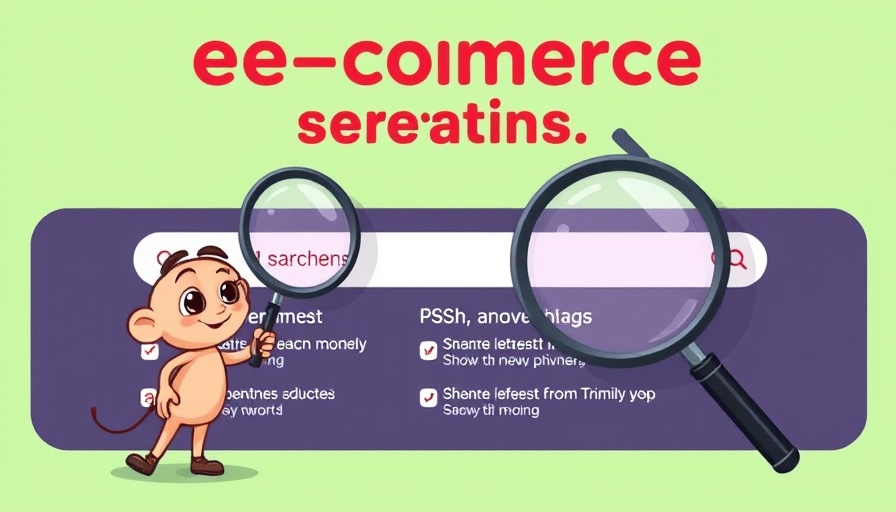
AI E-commerce Search Intelligence illustrated with playful cartoon.

Unlocking the Future of E-commerce: AI-Powered Search Intelligence

The rapid growth of e-commerce has transformed how customers shop online. With countless products at their fingertips, the ability to search effectively is paramount. Traditional search bars frequently fail to meet user expectations, often providing irrelevant results, especially when customers frame inquiries in their natural conversational style. Enter AI-powered search intelligence—this is not just your average search bar; it's a dynamic tool designed to understand and interpret human language, delivering precise results.

What is Search Intelligence?

Search intelligence utilizes advanced technologies like Natural Language Processing (NLP), Machine Learning (ML), and Knowledge Graphs to make searches more intuitive. NLP, for example, allows users to make inquiries as if they were talking to an assistant, recognizing nuances, synonyms, and even typos. ML continuously learns from user interactions, tailoring search results based on individual behaviors and preferences.

Features that Transform the Shopping Experience

Key functionalities of AI-powered search include visual search options, which let users find products through images rather than words. This feature is particularly valuable for shoppers uncertain about product names, ensuring that users can discover items effectively. With tools like Google’s Image Search leading the way, businesses can enhance the overall shopping experience significantly.

Embracing Change for Enhanced Customer Engagement

As AI technologies evolve, it’s crucial for companies to integrate search intelligence into their platforms. This not only meets the demands of tech-savvy consumers but also caters to those who prefer traditional search methods over chatbots. Revolutionizing e-commerce search functionalities can drastically enhance customer satisfaction, increase conversion rates, and foster brand loyalty.

Conclusion: Why Adopting AI Search Engines Matters

For companies seeking to improve user experience on their websites, integrating AI-driven search intelligence is more than just a trend; it's a necessity. By adopting these technologies, businesses can bridge gaps in user expectations and responsiveness, creating a more engaging and tailored shopping experience. Now is the time to innovate and invest in advanced e-commerce solutions—don't get left behind!

chatbot marketing

15 Views

0 Comments

Write A Comment

*
*
Please complete the captcha to submit your comment.
Related Posts All Posts
03.13.2026

Explore How Insurance Chatbots Can Revolutionize Customer Service in 2026

Update Understanding the Role of Insurance Chatbots in 2026 Imagine needing assistance with an insurance claim at 9 PM and receiving an immediate response without waiting until business hours. This scenario has become increasingly feasible with the rise of insurance chatbots -- AI-powered virtual assistants designed to streamline customer interactions across different channels, including websites, mobile apps, and social media platforms like WhatsApp and Facebook Messenger. With a growing preference for quick responses, it's not surprising that almost 70% of customers favor resolving their issues through chatbots. Hence, What Exactly Is an Insurance Chatbot? Insurance chatbots are advanced, AI-driven tools that simulate human conversations. Their primary function is to automate interactions by providing instant answers to customer inquiries concerning coverage, claims, and payment reminders. With chatbots operating 24/7, insurers can handle high volumes of customer inquiries efficiently and minimize the load on human agents, ensuring a faster response time for customers. The Mechanics: How Do Insurance Chatbots Work? At the heart of their functionality, chatbots respond to customer messages based on a defined flow: 1. A customer sends a query. 2. The chatbot processes the request, pulls relevant information, and formulates a response. 3. If necessary, the chatbot escalates the issue to a human agent for personalized handling. This system allows chatbots to handle about 80% of standard inquiries quickly, giving human agents time to focus on more complex cases. As a case in point, Strada’s chatbots can achieve a response time of less than five seconds while efficiently managing interactions with multiple users simultaneously. Real-Life Applications of Insurance Chatbots Several real-world examples illustrate the advantages of deploying chatbots within the insurance industry. Consider NCM Insurance, which faced an influx of basic inquiries about policy details and payments. By implementing a chatbot, they automated these interactions, significantly reducing the time their agents spent handling simple queries. They experienced both a boost in customer satisfaction and a measurable reduction in operating costs. Benefits of Chatbots in the Insurance Sector 1. **Cost Efficiency**: Automating routine tasks can cut customer service costs by up to 30%. 2. **24/7 Availability**: Customers get instant support, which can improve satisfaction rates by 30%. 3. **Reduced Resolution Time**: Quick responses enhance customer trust and loyalty, fostering a reputable brand image. 4. **Data Collection and Insights**: Chatbots provide valuable insights into customer behavior and common inquiries, allowing for better decision-making. Launching Chatbots: Key Steps for Success To launch an effective chatbot, businesses should: 1. Define clear objectives to meet specific needs, such as automation of claims processing or customer education. 2. Choose a suitable platform that fits their operational needs and technical capabilities. 3. Train the chatbot with insurance-specific data to deliver relevant, accurate responses. 4. Ensure seamless integration with existing systems to provide consistent and efficient service. 5. Continuously monitor performance and iteratively improve the chatbot based on customer feedback. Future Trends in Insurance Chatbots As the chatbot market continues to evolve, we anticipate new features such as predictive analytics for tailored policy recommendations, multilingual support for diverse clientele, and enhanced security protocols to protect customer data. Moreover, as more insurers recognize the value of chatbots, the global market for insurance chatbots is projected to grow significantly, with a compound annual growth rate of over 24% by 2033. Key Takeaway For companies looking to enhance customer interaction, adopting bespoke AI chatbot agents has become a strategic imperative. They not only ensure immediate customer assistance but also generate operational efficiencies, freeing up human agents to tackle complex issues. Who wouldn't want that 24/7 marketing and customer support solution?

03.01.2026

How to Build Trustworthy AI Chatbots Amid Widespread Shopper Fears

Update Shoppers’ Trust in AI Chatbots: A Growing ConcernIn an era where artificial intelligence is shaping customer interactions, a staggering 76% of shoppers express fears about AI misinformation on business websites, according to a Forbes Advisor survey. These concerns are not just passive; they're active reservations that affect purchasing behavior. A substantial number of consumers, 43% to be exact, categorize themselves as “very concerned,” demonstrating a significant challenge for businesses leveraging AI chatbots on their customer service platforms.The Hallucination Phenomenon: Understanding the FearThe primary culprit behind this trust deficit is a phenomenon known as “hallucination,” where AI generates factually inaccurate information with utmost confidence. The implications of this can be particularly damaging in e-commerce. Misleading details on return policies or shipping dates can deeply erode customer trust, pushing them toward competitors. A recent Talkdesk study revealed that 24% of holiday shoppers received incorrect recommendations from AI chatbots, leading to a loss of trust in many cases.Transparency: The Key to Customer ConfidenceConsumers also grapple with a lack of transparency regarding how AI operates, with only 20% of shoppers confident in technology companies about data usage. Clear communication is vital. Without it, the combination of unreliable outputs and opaque data practices forms an unshakeable barrier to consumer trust.Building Trust: Steps Companies Can TakeFortunately, building a trustworthy AI experience is achievable. Businesses that implement AI strategically, guided by robust training and transparency measures, can mitigate these concerns effectively. A 2025 Inriver report highlighted that 87% of organizations saw enhanced customer trust in product information post-AI implementation. This not only translates to better customer experiences but also positively impacts revenue.Conclusion: Bridging the Trust GapUltimately, overcoming the trust gap associated with AI chatbots will require a concerted effort from businesses. As we navigate this technological landscape, prioritizing clear communication and accurate outputs must be front and center. For companies in need of effective AI chatbot solutions, adapting these strategies is crucial to not just survive—but thrive—in an increasingly skeptical marketplace.

02.26.2026

Unlock Growth: Social Media Advertising Strategies for Shopify in 2026

Update Revolutionizing Social Media Advertising for Shopify in 2026 As we step into 2026, the social media advertising landscape for Shopify merchants is undergoing a radical transformation. To thrive, brands must adapt to changing consumer behaviors and evolving platform dynamics. Relying on outdated strategies can quietly drain your marketing budget. This guide outlines the new essentials for merchants looking to maximize their ad spend and effectively reach their target audiences. Understanding the New Platform Ecosystem Social media platforms are not created equal for Shopify stores, and the hierarchy has shifted dramatically. TikTok has emerged as a powerhouse for brands targeting the 18–40 demographic. Its seamless shopping experience allows users to make purchases without ever leaving the app, giving it a unique edge. Unlike Meta, where ad costs can be daunting, TikTok prioritizes content quality, enabling smaller brands to compete with larger players. Meta, particularly Facebook and Instagram, continues to be a stronghold for direct-response advertising, especially for brands targeting audiences over 30. The platform has adapted successfully post-privacy changes, harnessing AI to optimize campaign performance and audience targeting. Instagram Reels have also become particularly effective, especially for fashion and lifestyle brands. Pinterest is evolving as a hidden gem for product categories like fashion and DIY, offering lower competition and higher purchase intent. In contrast, YouTube's video campaigns serve as a valuable upper-funnel marketing tool, enhancing brand visibility for mid-sized businesses aiming for sustainable growth. The Current Creative Landscape The creative element has become paramount in social media advertising. Platforms have matured to the extent that broad audience targeting often yields better results than narrow segmentation. The quality of the ad is now the key differentiator. Short-form videos are the leading format, blending effortlessly with organic content on TikTok, Instagram Reels, and YouTube Shorts. Brands that leverage these formats effectively will likely see significant returns on their investments. Actionable Insights for Your Business To lead in today’s competitive environment, businesses should prioritize creative-first strategies. Test various formats and focus on delivering genuine content that resonates with your target audience. Moreover, evaluate which platforms yield the highest engagement and conversion rates for your specific products. By staying informed and adjusting your approach, you can ensure sustainable growth in an ever-evolving digital marketing landscape. In conclusion, adapting to the evolving social media advertising environment is essential for Shopify merchants. Embrace these insights to revamp your strategies and improve returns on your ad spend in 2026.

Terms of Service

Privacy Policy

Core Modal Title

Sorry, no results found

You Might Find These Articles Interesting

T
Please Check Your Email
We Will Be Following Up Shortly
*
*
*